Surface magnetic fields have been successfully measured on “solar-analog” T Tauri stars, using Zeeman
broadening (Johns-Krull et al., 1999
; Valenti and Johns-Krull, 2004
; Johns-Krull, 2007a
). For example,
BP Tau (a 0.65
CTTS) maintains a mean magnetic field strength (
Bf) of 2.6
0.3 kG, i.e.,
the equivalent of sunspots for f = 1. Such field strengths exceed the equipartition value of T Tauri
photospheres (
1 kG, Johns-Krull et al. 1999
; Johns-Krull 2007a
), which may be a consequence of
near-total surface filling (Solanki, 1994; Johns-Krull, 2007a
). T Tauri photospheres are therefore
dominated by magnetic pressure rather than thermal pressure, in contrast to MS stars and the Sun but
similar to stellar coronae in general. The average surface magnetic fields of CTTS also exceed a prediction
from X-rays, based on a correlation between X-ray luminosity and photospheric magnetic flux
valid for MS stars and the Sun (Pevtsov et al., 2003). Upper limits of the net polarization of
photospheric lines suggest that the photospheric magnetic fields form predominantly in small-scale
structures, although a dipole may dominate at large distances (Johns-Krull et al., 1999
; Valenti and
Johns-Krull, 2004; Johns-Krull, 2007a
). Large dipole components are also suggested from observations of
spots concentrated at the poles of T Tauri stars, similar to active MS solar analogs (e.g., Joncour
et al., 1994; Hatzes, 1995; Rice and Strassmeier, 1996). In any case, the observed fields should be strong
enough to truncate circumstellar disks indeed (Johns-Krull et al., 1999; Johns-Krull, 2007a),
even if rather complex (non-dipolar) surface magnetic field distributions are assumed (Gregory
et al., 2006).
Zeeman–Doppler Imaging techniques have successfully been applied to extremely active solar analogs in the PMS phase. A particularly clear case was presented by Donati et al. (2000), finding solar-like differential rotation on a post-T Tauri star (see also Section 4.3.1). More recently, Donati et al. (2007) have reconstructed a rather complex, large-scale magnetic topology on the CTTS V2129 Oph; they found a relatively weak dipole but stronger octupolar fields that are tilted against the rotation axis, with strong near-polar spots. The accretion footpoints are also found to be located at high latitudes. An attempt was made at extrapolating the fields to the inner rim of the disk, showing that some field lines should successfully accrete toward the observed hot spots.
At coronal levels, X-ray rotational modulation provides information on the large-scale distribution of
stellar magnetic fields. Rotational modulation is widespread among extremely active T Tauri stars
(Flaccomio et al., 2005
). Some 10% of the studied stars in the Orion X-ray sample show such evidence,
suggesting that: i) the X-ray emitting active regions are not homogeneously distributed on the surface, i.e.,
despite the X-ray saturation level reached by these stars, the surface cannot be filled with X-ray-bright
magnetic loops; ii) the X-ray emitting regions responsible for the rotational modulation are directly
associated with the surface and cannot extend much beyond
(Flaccomio et al., 2005
). A comparison
of the modulation depth with the Sun’s modulation in fact shows that the longitudinal inhomogeneities are
similar (Flaccomio et al., 2005).
A defining property of (accreting) classical T Tauri stars is their strong line emission of, e.g., H
or Ca ii
H & K. These strong lines were initially thought to be evidence of massive chromospheres similar to those
seen on the Sun or in cool stars (see review by Bertout 1989), and the discovery of strong UV lines such as
those of Si ii, Si iv, and C iv – equivalent to “transition region” lines in the Sun formed above 104 K –
supported this picture.
However, when compared with MS stars, including chromospherically very active examples, UV line and
continuum emission is up to 102–104 times stronger in CTTS (see example of TW Hya in Table 4;
Canuto et al. 1982
, 1983
; Bouvier 1990
; Valenti et al. 2000
), regardless of the photospheric
effective temperature or the stellar rotation period but correlated with the mass accretion rates
derived from optical continuum data (Bouvier 1990
; Johns-Krull et al. 2000
; Figure 32
a below).
Further, UV or H
line surface fluxes of CTTS show, in contrast to more evolved stars, no
correlation with coronal X-rays, the latter being in the range of RS CVn-type active binary
systems or very active MS stars but the UV/H
lines showing a wide range of excess flux
(Bouvier, 1990).
Coronal and “chromospheric/transition region” fluxes are thus not correlated in CTTS,
contrasting strongly with MS and subgiant stars for which a sharp correlation is taken as evidence
for a common physical heating mechanism (operating in related magnetic fields; Section 5.6,
Figure 22
). An additional mechanism must be responsible for the optical/UV line flux excess.
Apart from the line excess fluxes, there is also a strong blue continuum excess that leads to
“veiling” in the optical spectrum, i.e., a filling-in of absorption lines by continuum emission;
this emission is also not compatible with chromospheric radiation. The most obvious property
common only to CTTS among the stars considered above is accretion; downfalling material
could provide the energy to generate the optical/UV excess (Bertout et al., 1988; Basri and
Bertout, 1989).
Nearly free-falling gas can be heated to maximum temperatures
in shocks forming at the bottom of magnetic accretion funnels (Calvet and Gullbring, 1998
). UV and
optical line emission could thus provide diagnostics for the accretion velocity, the mass accretion rate, and
possibly the surface filling factor of accretion funnels.
The present consensus, based on such concepts as well as line profile properties and correlations with the
mass accretion rate, is that the UV excess emission originates from material heated in accretion shocks
(e.g., Calvet and Gullbring, 1998; Gullbring et al., 1998). Some of the emission lines (e.g.,
H
, Ca ii) may also form in the accretion funnels themselves, or in stellar winds (Ardila
et al., 2002
).
Feigelson et al. (2002b
), Wolk et al. (2005
), and Telleschi et al. (2007b
) presented X-ray studies of
near-solar-mass stars (stars in the ranges of
and
,
respectively, in the former two studies of the Orion Nebula cluster, and wider in the latter study of
the Taurus star-forming region). The sample ages typically comprise the log t = 5.5–7 range
and contain both disk-surrounded and disk-less T Tauri stars. The median X-ray luminosity
in the Orion sample is found at log LX = 30.25, i.e., three orders of magnitude above the
average solar X-ray output, but there is evidence for a slow decay with age, log LX
t–1.1
(Feigelson et al., 2002b
; Wolk et al., 2005
). A shallower decay was reported by Preibisch and
Feigelson (2005) for the same stellar cluster, with an exponent between –0.2 and –0.5, but when
considering normalized LX / Lbol or average surface X-ray flux, then both Feigelson et al.’s and
Preibisch & Feigelson’s studies indicate that the LX decay law is roughly compatible with full
saturation (i.e., LX / Lbol
10–3) as the star descends the Hayashi track and its bolometric
luminosity is decreasing (Feigelson et al., 2002b
). Telleschi et al. (2007b
) used the Taurus
sample over a wider mass range but removed the strong LX versus mass correlation in order to
normalize the X-ray evolutionary behavior to a solar-mass star. The slope of the LX vs. age
correlation is fully compatible with the Orion results, with a power-law index of –0.36
0.11
although the correlation is dominated by scatter from other sources, and its significance is
marginal.
The evolutionary LX decay is thus qualitatively different from that in MS stars: it is due to stellar
contraction (and perhaps a change in the internal dynamo while the star transforms from a fully convective
to a convective-radiative interior); in contrast, the decay of LX in MS stars is due to stellar spin-down while
the stellar structure and size remain nearly constant. Figure 31
shows the long-term evolution of the
median X-ray output from PMS stages to the end of the MS evolution, for G-type stars with ages
10 Myr and K-type stars with ages
10 Myr (because the predecessors of MS G stars are PMS K
stars; data from Güdel 2004
). The slight trend toward decreasing LX at ages
10 Myr follows
approximately LX
t–0.3, in agreement with the individual trends for the Orion and the
Taurus samples, albeit the scatter is large. No “onset” of activity can be seen back to ages
1 Myr.
|
In summary, the age evolution of the X-ray output is modest in PMS stars, the bulk of the X-ray output being determined by other stellar properties. There are at least four such parameters that have been discussed in the recent literature: bolometric luminosity, mass, rotation, and mass accretion rate. I briefly summarize these parameter dependencies in turn:
If the photoelectric absorption by the accreting gas is small, then the softest X-ray range may reveal the
high-temperature tail of the shock emission measure thought to be responsible for the UV excesses
(Section 6.3.2). Telleschi et al. (2007b
) and Güdel et al. (2007b
) identified an excess in the O vii/O viii
Ly
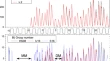
flux (or luminosity) ratio in CTTS when compared with WTTS or MS stars, the so-called X-ray soft
excess of CTTS (Figure 32
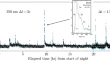
b). In the most extreme case of the CTTS T Tau, the excess O vii flux is such
that this line triplet, formed at only
2 MK, is the strongest in the soft X-ray spectrum (see Figure 33
;
Güdel and Telleschi 2007
).
|
|
Interestingly, however, the X-ray soft excess in CTTS is comparatively moderate, the L(O vii
r) / L(O viii) line flux ratio being enhanced by factors of typically
3–4 times that of equivalent MS
stars or WTTS (Figure 32
). Furthermore, the excess X-ray line fluxes do not seem to be correlated with the
UV line excesses but are correlated with the overall stellar coronal activity level traced, for example, by the
O viii Ly
line flux (Güdel and Telleschi, 2007
). It appears that the X-ray soft excess depends on the
level of magnetic (“coronal”) activity although it is, at the same time, related to the presence of accretion.
The two dependencies may point to an interaction between accretion and magnetic activity at “coronal”
heights.
The shock interpretation of the softest X-rays and the X-ray soft excess is appealing, but remains
controversial until a larger sample of CTTS with various accretion properties has been interpreted. In
particular, given the appreciable accretion rates, high shock densities of order 1012–1014 cm–3 are
expected, as first indeed reported from density-sensitive line diagnostics of O vii and Ne ix in the
CTTS TW Hya, forming at only a few MK (Kastner et al., 2002; Stelzer and Schmitt, 2004
).
However, some accreting PMS stars show much lower densities, such as AB Aur (Telleschi
et al., 2007b
) and T Tau (Güdel et al., 2007b
); the same discrepancy between expected and
observed densities has also been reported from ultraviolet density diagnostics (Johns-Krull
et al., 2000).
In stark contrast to the X-ray soft excess and the UV excess described above, it is now well established
that CTTS show a moderate suppression of 0.1–10 keV soft X-ray emission, typically by a factor of
2 when compared with WTTS of similar properties (Strom and Strom, 1994; Damiani
et al., 1995; Neuhäuser et al., 1995; Stelzer and Neuhäuser, 2001; Flaccomio et al., 2003; Preibisch
et al., 2005
; Telleschi et al., 2007a). Although selection/detection bias or different photoelectric absorption
has been quoted to be responsible for these differences (see Güdel 2004 and references therein),
the luminosity deficit in CTTS is now thought to be real; it appears that accretion suppresses
coronal heating in a fraction of the coronal volume (Preibisch et al., 2005), or at least leads to
larger amounts of cooler plasma, which is perhaps the same plasma inferred from the X-ray soft
excess (Telleschi et al., 2007b
; Güdel and Telleschi, 2007). Alternatively, the presence of a
circumstellar disk could strip the outer parts of the stellar corona, thus reducing LX (Jardine
et al., 2006).
A high level of near-continuous flaring is found in PMS solar-mass stars. As much as half of the emitted
X-ray energy, if not more, may be due to strong flares (Montmerle et al., 1983), and many TTS are
nearly continuously variable probably also owing to flares (Mamajek et al., 2000; Feigelson
et al., 2002a; Preibisch and Zinnecker, 2002
; Skinner et al., 2003). Examples with extreme luminosities
and temperatures up to 100 MK have been reported (e.g., Preibisch et al., 1995; Skinner
et al., 1997; Tsuboi et al., 1998, 2000; Imanishi et al., 2002). The most extreme flares are found on
CTTS and protostars, a possible hint at star-disk magnetic interactions during flares. Wolk
et al. (2005) studied frequency and properties of flares in the Orion Nebula cluster, concluding
that the median peak luminosity of their sample was log LX = 30.97, with extremely hard
spectra at peak time. The median electron temperature was found at 7 keV. An analogous study
has been presented by Stelzer et al. (2007) for T Tauri stars in the Taurus Molecular Cloud.
The extreme flaring recorded on these PMS stars may have an important bearing on coronal
heating (see Section 5.8) and on the alteration of solids in the young stellar environment (see
Section 6.6).
Early VLA surveys quickly reported strong radio emission from both CTTS and WTTS. Somewhat
unexpectedly, however, radio emission comes in two principal flavors. The early, pioneering studies by
Cohen et al. (1982), Bieging et al. (1984
), Cohen and Bieging (1986
), Schwartz et al. (1984), and
Schwartz et al. (1986) recognized thermal wind-type emission with rising spectra and in cases large angular
sizes for several CTTS. This radio emission can then be used to estimate mass loss rates; these are found
to range up to
10–7
yr–1 (André et al., 1987). The partly enormous kinetic
wind energy derived under the assumption of a uniform spherical wind suggests anisotropic
outflows while structural changes in the radio sources indicate variable outflows, probably along
jet-like features; at shorter radio wavelength, dust emission from the disk becomes apparent as
well (Cohen and Bieging, 1986; Rodríguez et al., 1992, 1994; Wilner et al., 1996). The
thermal radio emission tells us nothing about the presence or absence of stellar magnetic fields.
As described earlier, CTTS do show many signatures of magnetic activity, but whatever the
possible accompanying radio emission, it seems to be absorbed by the circumstellar ionized
wind.
The situation is different in WTTS in which the presence of huge flares (Feigelson and
Montmerle, 1985; Stine et al., 1988; Stine and O’Neal, 1998), longer-term variability, and falling spectra
clearly point to non-thermal gyrosynchrotron emission (Bieging et al., 1984; Kutner et al., 1986; Bieging
and Cohen, 1989; White et al., 1992a
; Felli et al., 1993; Phillips et al., 1996
) analogous to radio emission
observed in more evolved active stars. Conclusive radio evidence for the presence of solar-like magnetic
fields in WTTS came with the detection of weak circular polarization during flares but also in quiescence
(White et al., 1992b; André et al., 1992; Skinner, 1993). Extremely energetic particles radiating
synchrotron emission may be involved, giving rise to linear polarization in flares on the WTT star HD
283447 (Phillips et al., 1996). VLBI observations showing large (
) magnetospheric structures with
brightness temperatures up to Tb
109 K fully support the non-thermal picture (Phillips
et al., 1991).
As a WTT star ages, its radio emission drops rapidly on time scales of a few million years from luminosities as high as 1018 erg s–1 Hz–1 to values around or below 1015 erg s–1 Hz–1 at ages beyond 10 Myr. Young age of a star is thus favorable to strong radio emission (O’Neal et al., 1990; White et al., 1992a; Chiang et al., 1996), whereas toward the subsequent ZAMS stage it is only the very rapid rotators that keep producing radio emission at the 1015 erg s–1 Hz–1 level (Carkner et al., 1997; Magazzù et al., 1999; Mamajek et al., 1999).
Initial studies of a few accreting T Tau stars, in particular the old (
10 Myr) TW Hya, have shown an
abundance pattern in the X-ray source similar to the IFIP effect although the Ne/Fe abundance ratio is
unusually high, of order 10 with respect to the solar photospheric ratio, and the N/O and N/Fe ratios are
enhanced by a factor of
3.
These anomalous abundance ratios have been suggested (Stelzer and Schmitt, 2004
; Drake and
Testa, 2005) to reflect depletion of Fe and O in the accretion disk where almost all elements condense into
grains except for N (Savage and Sembach, 1996; Charnley, 1997) and Ne (Frisch and Slavin, 2003) that
remain in the gas phase which is accreted onto the star. If accretion occurs predominantly from the gas
phase in the higher layers of the disk while the grains grow and/or settle at the disk midplane, then the
observed abundance anomaly may be a consequence.
Larger systematics have made this picture less clear, however. Several CTTS and WTTS have revealed
large Ne/Fe ratios (
4 or higher), much larger than in MS active solar analogs (Kastner
et al., 2004; Argiroffi et al., 2005, 2007
; Telleschi et al., 2005
, 2007b
; Günther et al., 2006
) but similar
to RS CVn binaries (Audard et al., 2003b). In contrast, the CTTS SU Aur reveals a low Ne/Fe abundance
ratio of order unity (Robrade and Schmitt, 2006; Telleschi et al., 2007b
), similar to some other massive
CTTS (Telleschi et al., 2007b
).
Partial clarification of the systematics has been presented by Telleschi et al. (2007b
) (see also Güdel
et al., 2007b
) who found that
Anomalously high Ne/O abundance ratios remain, however, for TW Hya (Stelzer and Schmitt, 2004) and V4046 Sgr (Günther et al., 2006) when compared to the typical level seen in magnetically active stars, including PMS objects. The initial idea proposed by Drake et al. (2005) was that the selective removal of some elements from the accretion streams should occur only in old accretion disks such as that of TW Hya where cogulation of dust to larger bodies is ongoing, whereas younger T Tauri stars still accrete the entire gas and dust phase of the inner disk. However, the old CTTS MP Mus does not show any anomaly in the Ne/O abundance ratio (Argiroffi et al., 2007). Larger samples are needed for clarification.
|
| http://www.livingreviews.org/lrsp-2007-3 | This work is licensed under a Creative Commons Attribution-Noncommercial-No Derivative Works 2.0 Germany License. Problems/comments to |