The Sun affects the Earth and its environs in a variety of ways and on many different timescales. Events on the Sun leading to large perturbations in the coupled magnetosphere-ionosphere system are called geoeffective. From space weather point of view the key question is how to distinguish those solar events that are geoeffective from those that are not.
On average, the solar wind at Earth orbit has mean density of about 4 cm−3, mean velocity of about 400 kms−1, and mean interplanetary magnetic field (IMF) magnitude of 5 nT. The average direction of the interplanetary magnetic field along the Parker spiral in the ecliptic plane is at an angle of about 45∘ from the radial direction (Hundhausen, 1972). Geomagnetic activity is primarily driven by magnetic reconnection between the IMF and the terrestrial magnetic field. As the dipole is close to perpendicular to the ecliptic plane, it is primarily dependent on the southward component of the IMF, and the reconnection rate is proportional to the Y component of the motional electric field (E = −Vsw × BIMF) of the solar wind (Vasyliunas, 1975). Coherent solar wind structures containing southward magnetic fields and high velocities are thus most efficient drivers of space weather events.
In the longer term, the solar activity varies with the well-known 11-year cycle, which introduces an
11-year activity cycle also to the geomagnetic records. As the orientation of the dipole axis
relative to the Sun-Earth line changes over the course of the year, the activity is largest during
the equinoxes when the dipole is tilted along the Earth’s orbital track and the projection of
the IMF to the geomagnetic field maximizes (Russell and McPherron, 1973
). Similarly, the
activity level is at minimum during solstices when the projection of the IMF to the Earth’s field
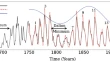
is on average at minimum. Figure 1
illustrates the close relationship of the long-term solar
activity (characterized by the monthly mean of the sunspot number) and the geomagnetic activity
using the planetary magnetic Ap index as a proxy. The left panels show the long-term solar
cycle variability with geomagnetic activity after the solar cycle maximum. The top right panel
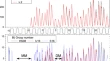
illustrates how the geomagnetic activity maximizes during the declining phase of the solar cycle.
The bottom right panel shows the semiannual variations obtained by averaging the monthly
values in the left hand plots. While the solar activity shows no annual variation, there is a clear
signal in the geomagnetic records arising from the Russell–McPherron effect due to the varying
orientation of the Earth’s rotation axis relative to the Sun-Earth line as the Earth rotates around the
Sun.
|
Coronal mass ejections (CME) expel vast clouds of solar magnetic flux and plasma into interplanetary space. The interplanetary structure formed by the coronal mass ejection (ICME) propagates outward from the Sun, often at high velocity (Schwenn, 2006). The coherent magnetic field structure, the strongly varying field and plasma density in the sheath region preceding the ICME proper, the fast solar wind speed, as well as the interplanetary shock itself are all effective drivers of geomagnetic activity (Farrugia et al., 1997). While the strongly southward field inside the ICME proper tends to drive high ring current activity, the more variable fields and densities in the sheath region drive strongest activity at the high-latitude auroral regions (Huttunen and Koskinen, 2004). As ICMEs are more frequent during solar maximum than during solar minimum (Bothmer and Schwenn, 1998), they contribute to the 11-year cycle in magnetospheric activity. Similarly to ICMEs, any coherent solar wind structures including long-lasting, high-intensity southward interplanetary fields drive magnetic storm activity with its many signatures in the magnetosphere-ionosphere system.
High-speed solar wind streams encountering the Earth most often originate from low-latitude coronal
holes. Such high-speed streams are often associated with strong Alfvénic fluctuations leading to strong
fluctuations of the IMF Bz and solar wind velocity. These periods are effective drivers of medium-level
activity in the high-latitude magnetosphere and in the ring current (Tsurutani and Gonzalez, 1987). The
high-speed streams are especially efficient in accelerating relativistic electron populations in the outer van
Allen belt. The electron fluxes maximize during the declining phase of the solar activity when
the high-speed streams are most frequent, and minimize during solar minimum (Paulikas and
Blake, 1979
).
During the declining phase of solar cycles, the coronal holes extend to low latitudes sometimes even reaching the ecliptic plane. When the high-speed solar wind emanating from the coronal holes runs into the slower solar wind, the interaction leads to a compression of the plasma and magnetic fields, forming corotating interaction regions (CIR) (Crooker et al., 1999). The CIRs seldom have fast shocks or continuous, strongly southward IMF Bz, and thus drive only moderate magnetospheric activity (Alves et al., 2006; Borovsky and Denton, 2006). CIRs, being associated with the coronal hole structure, also exhibit 27-day periodicity (Schwenn, 1990).
Interplanetary shocks when interacting with the Earth’s bow shock cause direct energy transfer into the magnetosphere. The ram pressure pulse associated with the shock compresses the dayside magnetopause, and the compression effects travel tailward at the solar wind speed causing strong auroral activity observable almost instantaneously all around the auroral oval (Zhou and Tsurutani, 2001).
In addition to the interaction with the solar wind, the Sun affects the Earth’s environment also through electromagnetic radiation that reaches the Earth much faster than the solar wind flow. This most familiar form of the Sun’s influence on the Earth is a factor also for space weather: Increases of the solar irradiance cause heating of the upper atmosphere, which affects the drag experienced by low-Earth-orbiting satellites. The irradiance exhibits both long-term (solar cycle) variations as well as shorter term changes related to active solar events, both of which can be monitored using the F10.7 radio flux as a proxy (Lean, 1991).
Solar energetic particles affect the space environment in multiple ways. In the outer magnetosphere
(especially near the geostationary region), their presence is a hazard for the satellite systems and
instrumentation (Baker, 2000). If they become trapped in the inner magnetosphere dipolar field, they
populate the van Allen belts, residing in the magnetosphere for extended periods (Hudson et al., 2004). As
the energetic particles can penetrate to 20 – 40 km altitude (depending on their energy), they also affect the
middle and upper atmospheric chemistry while colliding with the atmospheric constituents: The particle
precipitation leads to an enhancement of NO2 in the atmosphere, which in turn is a catalyst for ozone
distruction. This way the solar activity also affects the long-term balance of the atmospheric chemistry
(Seppälä et al., 2006
).
Thus, solar irradiation, energetic particle fluxes from the Sun, and the solar wind with its multiple structures all drive geomagnetic activity and are thus potential sources for space weather events. In the following, we review the basic properties of the structure and dynamics of the magnetosphere and associate these drivers with their consequences, both to the plasma environment and to the technological systems, in the terrestrial space environment.
| http://www.livingreviews.org/lrsp-2007-1 | This work is licensed under a Creative Commons Attribution-Noncommercial-No Derivative Works 2.0 Germany License. Problems/comments to |