4.1 Light-curve modelling
Since the discovery of stellar photometric variations due to cool spots, generally two approaches are used
to model such variations and to deduce starspot properties. One is based on a trial-and-error direct
light-curves modelling (LCM) when assuming a number of circular (or of other pre-defined shape) spots
causing the variations. Numerical techniques employing this approach have been developed by
Budding (1977), Vogt (1981
), Rodonò et al. (1986
), Dorren (1987), Strassmeier (1988) and
Kiurkchieva (1990). A technique taking into account time evolution of starspots has been proposed by
Strassmeier and Bopp (1992
). It allowed for detecting spot appearance and disappearance on time scales
from a few to a hundred days. A zonal model with (near-)equatorial inhomogeneous bands of spots was
considered by Eaton and Hall (1979
) and Alekseev and Gershberg (1996).
A disadvantage of the above mentioned models is that they have many free parameters and
the shape of spots or of spot distribution has to be assumed. Moreover, the solution is not
unique. To avoid many assumptions, an alternative approach performing light-curve inversion
(LCI) into an image of the stellar surface has been developed. An inversion technique is usually
applied to the photometric light curves in the two temperature approximation. The model
assumes that, because of low spatial resolution, the intensity of each pixel on the surface
contains contributions from both temperature components, the hot photosphere
, and cool
spots
weighted by the fraction of the surface covered with spots
(spot filling factor):
with
. The instantly observed stellar flux is the integral of the intensity contributions
from the surface elements seen at a given rotational phase. The inversion of the light curve
results in a distribution of the spot filling factor over the stellar surface, i.e., stellar image.
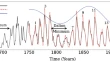
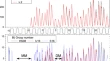
Figure 1 shows examples of light curves and maps of the spot filling factor obtained from them
for the RS CVn type star
Gem. Since a light curve represents a one-dimensional time
series, the resulting stellar image contains information on the spot distribution only in one
direction, in longitudes, while spot extents and locations in latitudes remain uncertain. As a
result, maximum spot concentration always appears at the central latitude of the stellar disk
whose value depends on the assumed inclination of the rotational axis. Because of the projection
effect and limb darkening, images show more well defined structures than the light curves and,
therefore, are very useful for determining longitudes of spot concentrations. Numerical techniques
based on such an approach have been elaborated by Messina et al. (1999) and Berdyugina
et al. (2002
).
More detailed information on the spot pattern from light curves can be obtained in the case of eclipsing
binaries by the eclipse mapping technique. This method employs the opportunity to scan the stellar disk in
finer detail by the eclipsing companion. The inversion techniques based on the Maximum Entropy and
Tikhonov regularisation methods (see Section 4.2) were developed by Rodonò et al. (1995
),
Collier Cameron (1997), and Lanza et al. (1998a
).
Inversion or modelling of light-curves is clearly less informative than techniques which are based on
spectroscopic observations. Continuous and frequent photometric data allow though for conclusions on
longitudinal spot patterns and their long-term evolution (Section 6).