Studying magnetic activity on stars other than the Sun provides an opportunity for detailed tests of solar dynamo models. Using only solar observations limits the range of the global stellar parameters for such tests, while an extensive sample of stars of various activity levels provides key constraints for stellar and solar dynamo theory.
Stellar activity similar to that of the Sun was first discovered on red dwarfs, a fraction of which exhibit
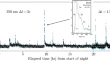
remarkable magnetic activity registered through observations of extremely strong optical flares
(UV Cet-type stars). Periodic brightness variations were observed in binary systems of red dwarfs
(BY Dra-type) as distortions of the light curves outside eclipses. Kron (1947
) was seemingly the first who
considered the hypothesis that spottedness of the stellar surface was causing these distortions. Later,
light-curve variations due to starspots and other magnetic phenomena were discovered on various types of
stars.
It was suggested by Skumanich (1972
) that rotation plays a crucial role in the generation of stellar
activity. This became evident later from the strong correlation of magnetic activity indicators with stellar
rotational velocities and periods. Such relations have been reported between rotation and coronal emission
(Pallavicini et al., 1981; Walter and Bowyer, 1981), chromospheric
and
emission (Vaughan
et al., 1981; Middelkoop, 1981; Mekkaden, 1985), ultraviolet line fluxes (Vilhu, 1984; Simon and
Fekel, 1987), and radio emission (Drake et al., 1989). It was found that cool stars with more rapid
rotation show a higher level of magnetic activity. Such active stars are the best choice for testing
and developing stellar dynamo theory. Among single stars these are pre-main-sequence stars
(T Tau-type) and early-age main-sequence stars of solar type. Evolved binary components which
are tidally locked at fast rotation by a close companion are also strongly magnetically active
(RS CVn-type, BY Dra-type, W UMa-type, and Algol-like systems). Rapidly rotating single giants
of FK Com-type, which are probably formed from coalesced binaries complete the selection
of magnetically active stars. An overview of magnetic phenomena on such stars is given in
Section 2.
Significant progress in observational tools and diagnostic techniques for studying starspots over the last
two decades has advanced our understanding of the nature of stellar activity. Long-term traditional
photometric observations reveal active region evolution and stellar activity cycles. High-resolution
spectroscopy allows for studies of the structure of active regions and stellar differential rotation with
the help of the Doppler imaging technique (Vogt et al., 1987
; Rice et al., 1989
; Piskunov
et al., 1990
; Collier Cameron, 1992
; Jankov and Foing, 1992
; Berdyugina, 1998
; Rice and
Strassmeier, 2000
). Observations of molecular lines provide a unique opportunity for insight into
spatially unresolved starspots (Berdyugina, 2002
) and unambiguous measurements of starspot
temperature (O’Neal et al., 1996
). Spectropolarimetry reveals the distribution of magnetic fields on
the stellar surface thanks to the Zeeman-Doppler imaging technique (Donati et al., 1997
).
Novel applications of (spectro-)interferometry, microlensing, asteroseismology, etc., broaden
the arsenal of tools and techniques for studying starspots. These are reviewed in Sections 3
and 4.
Since the discovery of rotationally modulated brightness variations due to starspots, a large amount of data has been collected for different types of stars. Brightness and colour variations allow for determining temperature of starspots and their relative area. Doppler images reveal spot distribution which is different from that observed on the Sun. Polarimetric measurements of starspots help to investigate the nature of the underlying magnetic fields. Starspot properties, including their temperature, sizes, magnetic field strengths, lifetimes, and distribution over latitudes and longitudes are reviewed in Section 5.
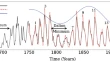
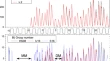
Time-series observations over decades reveal stellar cycles similar to the 11-year sunspot cycle. On
the other hand, persistent active longitudes and a new type of stellar cycle related to them
(flip-flop cycle) have been first discovered on cool stars and later on the Sun (Berdyugina and
Tuominen, 1998
; Berdyugina and Usoskin, 2003
). In binaries, orbital period variations suggest long-term
changes of the magnetic field distribution in stellar interiors (Hall, 1991b
; Rodonò et al., 1995
; Lanza
et al., 1998a
). Such observations provide valuable constraints for stellar and solar dynamo models. An
overview of stellar activity cycles and their implications for dynamo theory is given in Sections 6
and 7.
Previous short reviews on starspots and their role in understanding the stellar dynamo were given by
Hall (1991a
), Lanza and Rodonò (1999a), Berdyugina (2004) and Strassmeier (2005). Also, starspots
were thoroughly discussed at the international workshop “Surface Inhomogeneities on Late-Type Stars”
(1990, Armagh), IAU Symposium 175 “Stellar Surface Structures” (1995, Vienna) and the First Potsdam
Thinkshop “Sunspots and Starspots” (2002, Potsdam). The present review covers main tendencies in
starspot research for the last two decades.
| http://www.livingreviews.org/lrsp-2005-8 |
© Max Planck Society and the author(s)
Problems/comments to |